Search
Login
Register

The importance of a sound economic education

Tue., February 10, 2009

Why is the U.S. unemployment rate nearly 10 percent? Why does the average American worker have to work until July 16th just to pay his or her share of the cost of government? Why has the government borrowed more money in the past eight years than in all of the previous years of our nation's history combined?

Brennan Brown

The answers all stem from a lurking issue in our nation's educational system: a lack of teaching students about sound economic principles.

Our current economic crisis is at best the result of a lack of a sound economic education and at worst the unwilling nature of politicians to enact what is in the best long-term interest of the American people.

A well-rounded training in economics begins with a deep understanding and appreciation of the free enterprise system. Specifically, economics students of all ages must possess a healthy respect for private property, comprehension of free markets, understanding of the profit and loss system, and the ability to define the proper role of government - to protect our unalienable rights to life, liberty and property.

There is little doubt that economic education improves economic literacy, which, in turn, leads people to support sound economic policy. The National Assessment of Educational Progress, known as "The Nation's Report Card," administered its first-ever economics test to high school seniors in 2006. Results showed that while only 42 percent scored at the "proficient" level, those who had taken an advanced economics class did significantly better.

Similarly, the Arizona Council on Economic Education administered its own test to high school seniors and found that those who had studied economics did better than those who had not, and those who took a course with rigorous standards did better still. The latter group also had more favorable attitudes to market solutions to economic problems.

While our current policymakers may not be armed with a solid education in economics, Northwood University is working to shape the future leaders of a global, free enterprise society. That means making sure every student has a rich understanding of free-market economics.

Northwood University has recently taken this mission one step further.  A partnership between Northwood and Cornerstone Schools, a K-8 private school in Detroit, focuses on teaching these essential economic principles to eighth-grade students. As our nation struggles through the worst economic turmoil in recent history, it is clear that lessons in sound economics cannot come early or often enough.

#####

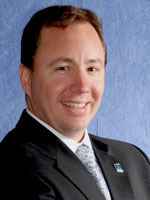
Brennan Brown currently serves a dual appointment with Northwood University as both Faculty Manager for Northwood's Adult Degree Program and a Professor of Economics.  Previously, Mr. Brown was an Adjunct Professor of Economics with Northwood University and an economic and education policy advisor to state Sen. Nancy Cassis, R-Novi. 

Michigan Education Daily
"An ambitious proposal to overhaul Detroit Public Schools ran into opposition Thursday over the issue of dissolving the school board and allowing Mayor Dave Bing to take charge." >>
"At least 14 public school districts in the Muskegon area offer some type of alternative education, either on their own or through a consortium, but the programs are under both budget and academic pressure." >>
"Michigan voters may see a ballot initiative in August asking them to approve a sales tax on services, with the understanding that their approval would also mean education spending reform, the chairman of the House Education Committee said Wednesday." >>
"All Flint Community Schools administrators, including members of the superintendent's cabinet, are likely to receive layoff notices this spring, though the majority could be back next year." >>
"Sara McLaren is taking a once-in-a-decade opportunity to tie the U.S. Census directly to her civics and social studies curriculum at Niles High School." >>
"Research done by the dean of the University of Michigan school of education was featured at length in a New York Times magazine article recently about training effective teachers." >>
"A public education advocacy group said Monday that Michigan should begin taxing consumer services at 5.5 percent, while reducing the existing sales tax from 6 to 5.5 percent, as a way to generate $550 million for schools in 2011." >>
User Comments
Is it true that young ones today are losing interest on these subjects? Obviously, the White House is promoting programs that will help students on coping up with math and science subjects. But, The federal government thinks that the quality of math and science education can repair credit with the scientific community and improve US education with a few <a rev="vote for" title="U.S. Government Spends $250 Million on Science and Math" href="http://personalmoneystore.com/Payday-Loans/ ">payday loans</a> of sorts. In reality, it will take far longer to accomplish than they might think – US educators can't even get students to accept that "irregardless" isn't a word, and the difference between their, they're, and there – our students can't even learn their own language! It's a noble aim, to be sure, but throwing money at it may not work in the long run. >>
I am a teacher in the same county who is presently trying to quit the union. Like Caldwell, I strongly disagree with the MEA.

This article was timely.

Rob Olson
Pittsford Area Schools

>>
I agree this is a change worth making. I describe some of the uneven effects of the idea on my blog at http://rickolson.blogspot.com/2009/08/statewide-health-insurance-plan-for.html which you may also wish to read.

The devil will be in the details, so this is one we will need to monitor closely.

Rick Olson from Saline, former school Business Manager >>

Nowadays, saving money is very crucial and properly investing the money can keep you and your family away from the effect of the financial crisis. The sad news is that a lot of the options for short term funding have been drying up. Short term funding is a necessary thing to have around, and going through traditional channels such as banks isn't an option for a lot of people anymore – basically it's only open to Ken Lewis. Installment loans are an option, but some people, including senior citizens, have been thinking about raiding their retirement fund. Getting into your pension retirement plan or 401(k) funds is the last thing you want to do if you don't qualify for any withdrawals yet. The penalties are substantial, and you'll end up needing installments loans to pay them if you use retirement funds for <a rev="vote for" title="Installment Loans Reliable Option As 401(k)s are Dwindling" href="http://personalmoneystore.com/moneyblog/2009/05/17/installment-loans-reliable-option-401ks-dwindling/">short term funding</a>.


>>
I AGREE >>
Godfrey-Lee on the west side of the state has been running all-day, every-day kindergarten for several years. >>
We have a problem in Detroit Public School, their system had cash flow problem for years now. And honestly it getting worst in terms in progression with more children leaving to charter their schools almost every year. The state decided to give the Detroit school districts cash advance of $70 million so they would meet the schools expenses, as well as payment for teachers. Robert Bobb, the newly appointed emergency financial manager, requested the funds early in order for him to get the house in order before he had to start panicking. President Obama has been giving out large sums of money for troubled school districts, perhaps that’s where a generous portion of the aid came from. Getting Detroit Public Schools in working order is a worthy cause.

LINK TO READ FOR MORE INFO:
http://personalmoneystore.com/moneyblog/2009/03/10/state-advance-detroit-public-schools-70m/


>>
I am all for school choice and think its great that charters are finally moving forward. However, I'm wondering if the research accounts for a playing field that is not level. I can't take my school buildings and move them anywhere I want, nor can I simply slap up a pole building and make it a school. If anything, public schools need less state regulation and oversight so we can play by the same minimal rules charters do. If you want public schools to compete to improve, remove the barriers to doing so. I will gladly except less funding per pupil if the playing field is level.
>>
The purpose is to encourage non excercising children to excercise but my daughter's highschool gave her an improper body fat percentage and made my healthy daughter who trains 20 hours a week in tap jazz and ballet believe she was overweaghit instead of a person with muscles.
I believe the public schools do not have the right to make the diagnoses with these kids because they are using one measurement and recording it from their arms that they have a certain percetnage of body fat with one arm caliper test.
Does any one have feed back?
>>
Specifically, 81 percent of students in religiously affiliated schools and 82 percent of students in other private schools have parents who report being "very satisfied" with their schools, compared to 55 percent of students in assigned public schools and 63 percent of students in chosen public schools.

High levels of satisfaction among private school parents also extend to opinions about their children's teachers, academic standards of the school, order and discipline at the school, the amount of homework assigned, and interactions with school personnel.

http://fitt.in >>