

 Font size:
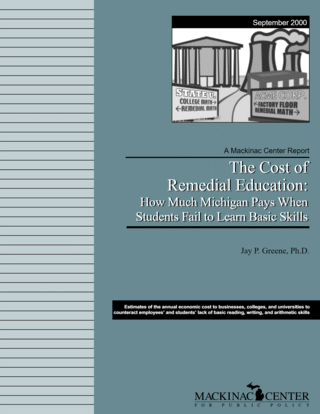
More than a third of Michigan students leave high school without possessing basic academic skills including reading, writing, and arithmetic. This forces employers and post-secondary schools to take up the slack. This study conservatively estimates that Michigan businesses and institutions of higher education spend over $600 million annually to teach employees and students skills they should have learned in high school. The comparable national figure is $16.6 billion, but the human costs of K-12 educational failure are incalculable, according to experts' essays included in the study's appendices.

The Mackinac Center for Public Policy is a nonprofit research and educational institute that advances the principles of free markets and limited government. Through our research and education programs, we challenge government overreach and advocate for a free-market approach to public policy that frees people to realize their potential and dreams.
Please consider contributing to our work to advance a freer and more prosperous state.


